California’s Rhys Vineyards focuses on mountain fruit and delivers heavenly wines from grapes grown above the clouds. Crafting all selections from organic and biodynamically farmed, high-elevation estate vineyards in the Santa Cruz Mountains AVA and Anderson Valley AVA, Rhys delivers concentrated Pinot Noir wines with bold, earthy, rustic character. The hands-off approach in the winery allows the terroir to speak through each wine, providing an intriguing portfolio showcasing the quality that carefully tended vineyards can deliver. As the wines are big, with ripe, crunchy tannin, they can easily hold for several years to allow the tannin to soften and become fully integrated. If you can’t wait to sip this beautiful juice, decant your selection of choice for a few hours before enjoying it. #cheers
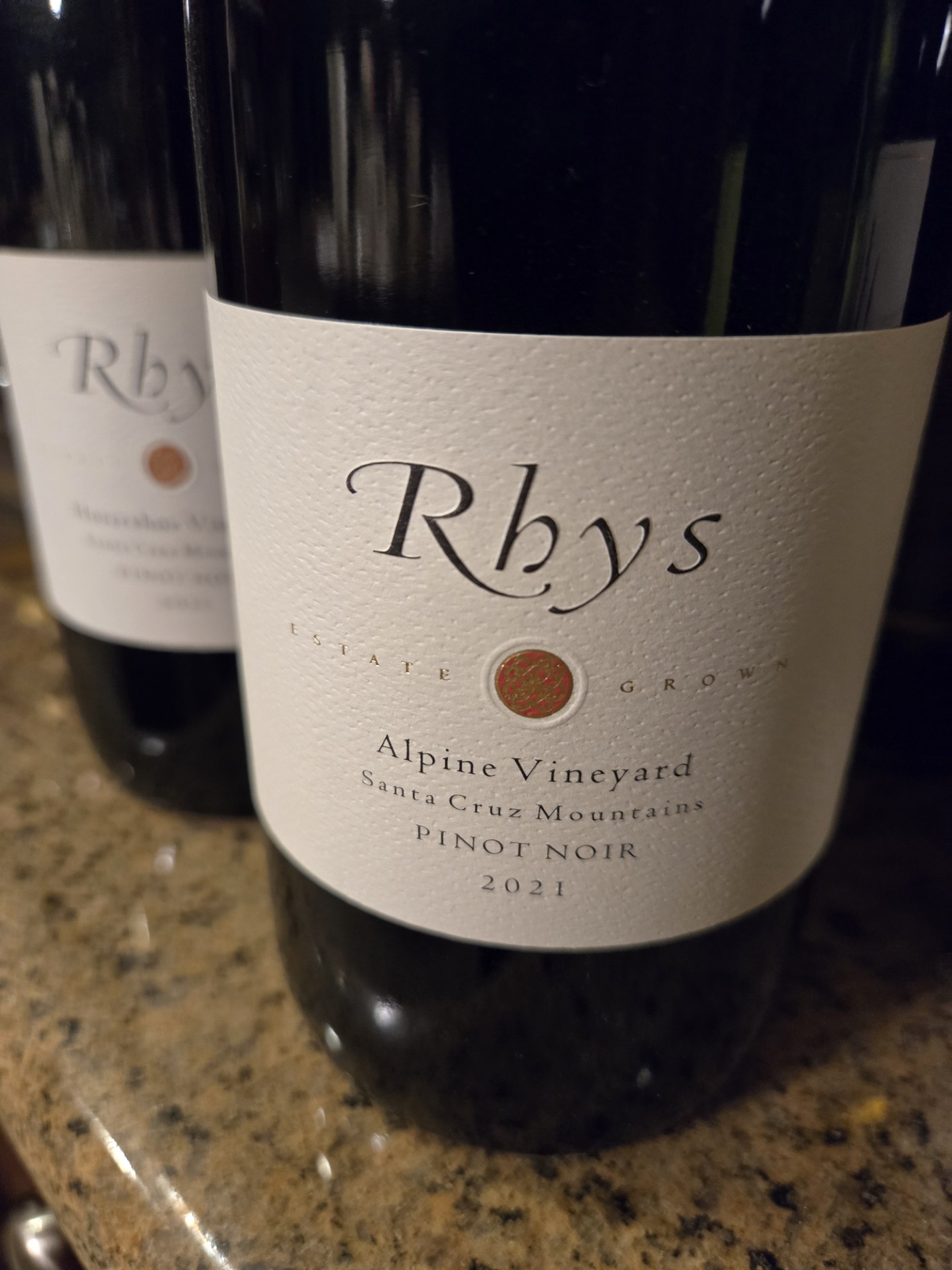 Lying ten miles off the Pacific, Rhys Alpine Vineyard boasts a mix of 16 heritage clones planted in tight rows in soils of the Purisima formation dating back over four million years. Planting the clones in one half-acre blocks, each with its own micro-climate, ensures each vine shows a unique character. Soils are shallow and rocky and sit at elevations of 1200 to almost 1500 feet, just 10 miles from the Pacific. Rhys Alpine Vineyard Pinot Noir melds ripe and stewed black cherry, fig, and boysenberry with toasted spices and a subtle hint of caramel.
From the southern end of the Santa Cruz Mountains, Rhys Mt. Pajaro Vineyard Pinot Noir sits 900 feet above sea level with rocky marine and clay subsoils. The vineyard, only seven miles from Monterey Bay, basks in the influence of the Pacific Ocean. This unique location, with warm days, cool nights, and gentle ocean breezes, keeps the vines healthy and fresh while producing bold, rich Pinot Noir. The wine opens with layers of black cherry, raspberry, pomegranate, and ripe plum, with notes of dried leaves and dark chocolate.
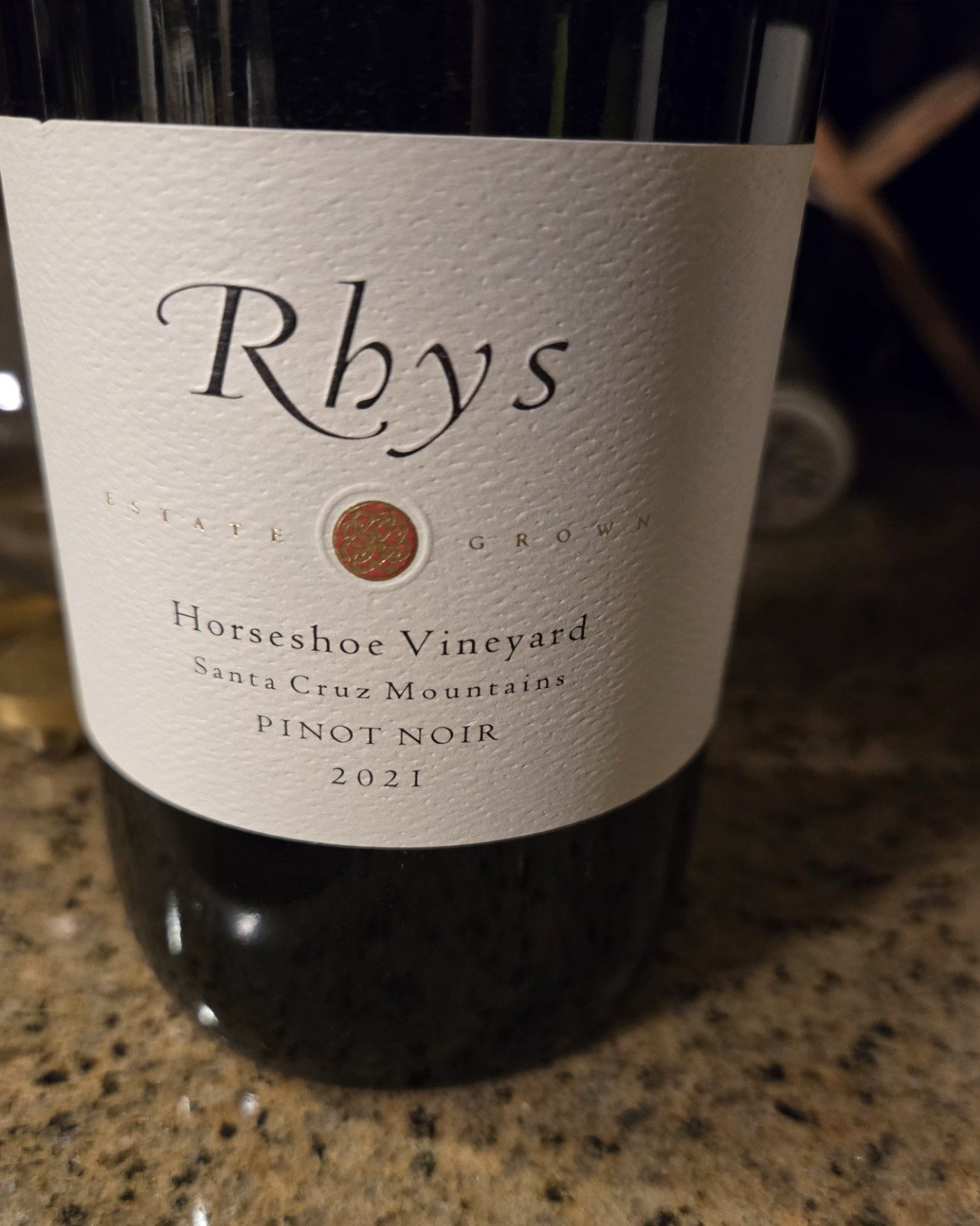 Rhys Vineyards Horseshoe Vineyard Pinot Noir sits at 1360-1610 feet above sea level, with vines planted on a ridge of sedimentary shale and volcanic ash, creating mineral-driven wines. As the soils provide high drainage levels, the vine’s roots dig deep into the earth to find nutrients, creating low-yielding fruit clusters of incredible complexity. The vineyard was initially planted in 2004 with 13 clones of Pinot Noir, along with Syrah and Chardonnay. The Pinot Noir from this site has lovely, crushed stone minerality that blends with ripe fruit, soft herbs, and a touch of forest floor.
 Red Wine With Breakfast